
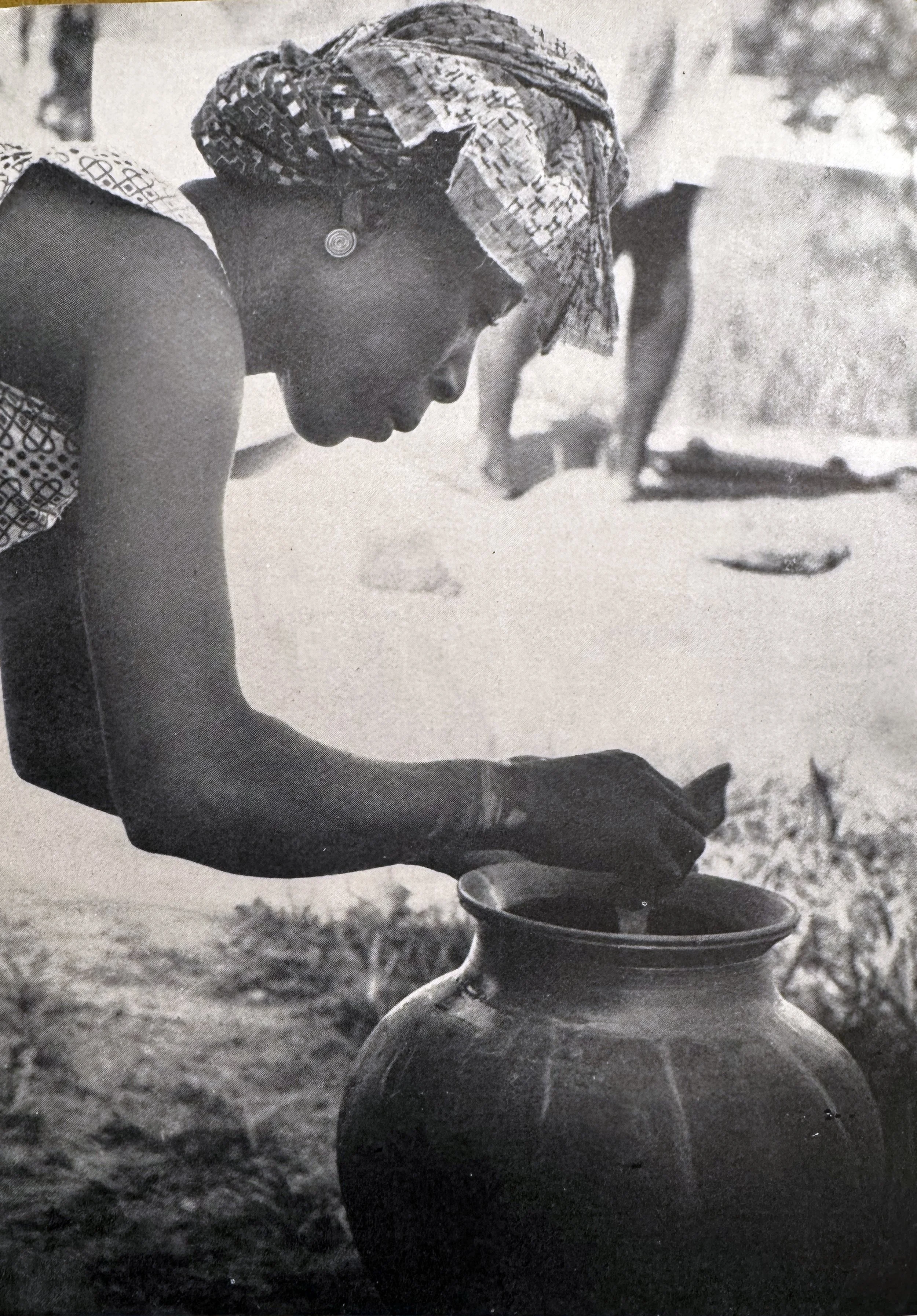
Ladi Kwali
Ladi Dosei Kwali (c. 1925–1984) was born in the village of Kwali (now part of Nigeria’s Federal Capital Territory), into a family where pottery was a traditional female craft. From a young age, she learned pottery from her aunt, mastering the ancestral technique of coiling and pinching clay by hand to create functional vessels such as water jars, cooking pots, bowls and storage containers. Her early works were often decorated with incised geometric and stylised figurative motifs, including lizards, crocodiles, scorpions, birds, and fish, reflecting the symbolic language of her Gbari (Gbagyi) heritage.
In 1954, she enrolled at the newly founded Abuja Pottery Training Centre, becoming the first female potter to train there. While at the Centre, she learned wheel-throwing, glazing, kiln-firing, slip and saggar techniques. Yet she never abandoned her roots: she continued to hand-build vessels with coiling, decorating them using sgraffito and incised motifs. She often filled incised patterns with white slip and applied a translucent glaze, achieving a striking effect, a beautiful fusion of traditional Gbagyi pottery and Western studio ceramics.
Over her career, she produced hundreds of jars, pots, bowls and other forms that transformed clay vessels into objects of art. Her work gained international recognition through exhibitions in London and beyond in the late 1950s and 1960s.
Ladi Kwali died on 12 August 1984 in Minna. Her legacy endures not only through her pottery but also symbolically and nationally: she remains the only Nigerian woman to appear on the country’s currency, the 20-naira note, and the pottery centre she helped shape was renamed the Ladi Kwali Pottery Centre. Through her mastery of clay, Ladi Kwali bridged ancestral tradition and modern technique, elevating a local woman’s craft to international art. Her life and work stand as a testament to creativity, cultural memory, and the power of craft to speak across global boundaries.
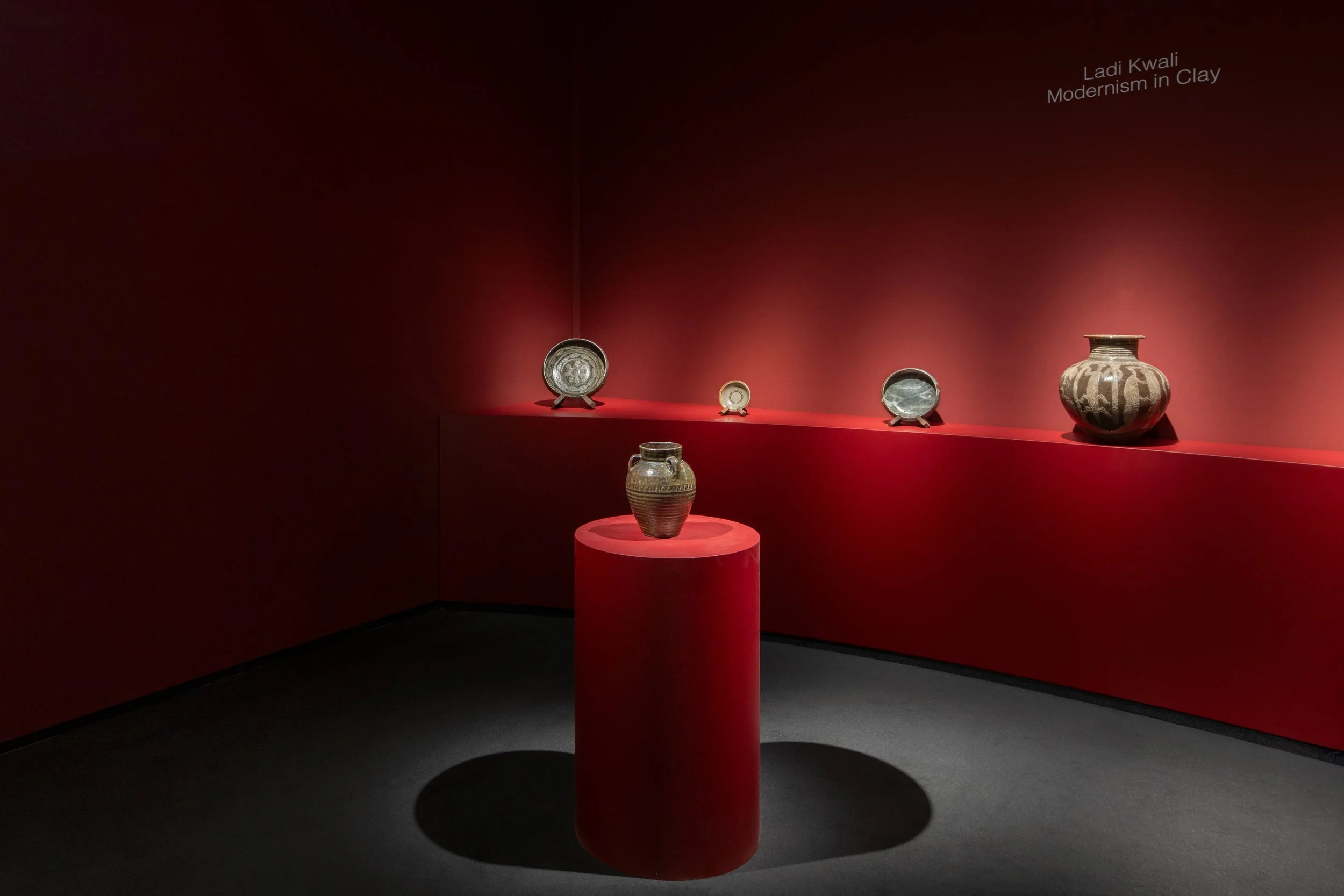
At TEFAF Maastricht 2026, TAFETA presents renowned potter and ceramicist Ladi Dosei Kwali (c. 1925–1984), now recognised as a prominent Nigerian female modernist artist. This solo presentation pays tribute to the extraordinary life and artistry of Ladi Kwali, a singular figure whose work reshaped the global understanding of African ceramics in the twentieth century. Born in the village of Kwali among the Gbari (Gbagyi) people of what is now the Federal Capital Territory, Abuja. Kwali came from a long line of women potters.
Despite lacking formal schooling, she quickly distinguished herself as the centre’s most accomplished potter. Although taught wheel-throwing, Kwali primarily continued to work in the traditional freehand modelling technique, which she was already skilled in. She adapted high-firing stoneware clay to her own methods, producing robust, sculptural vessels that combined Gbari hand-building with new surface treatments.
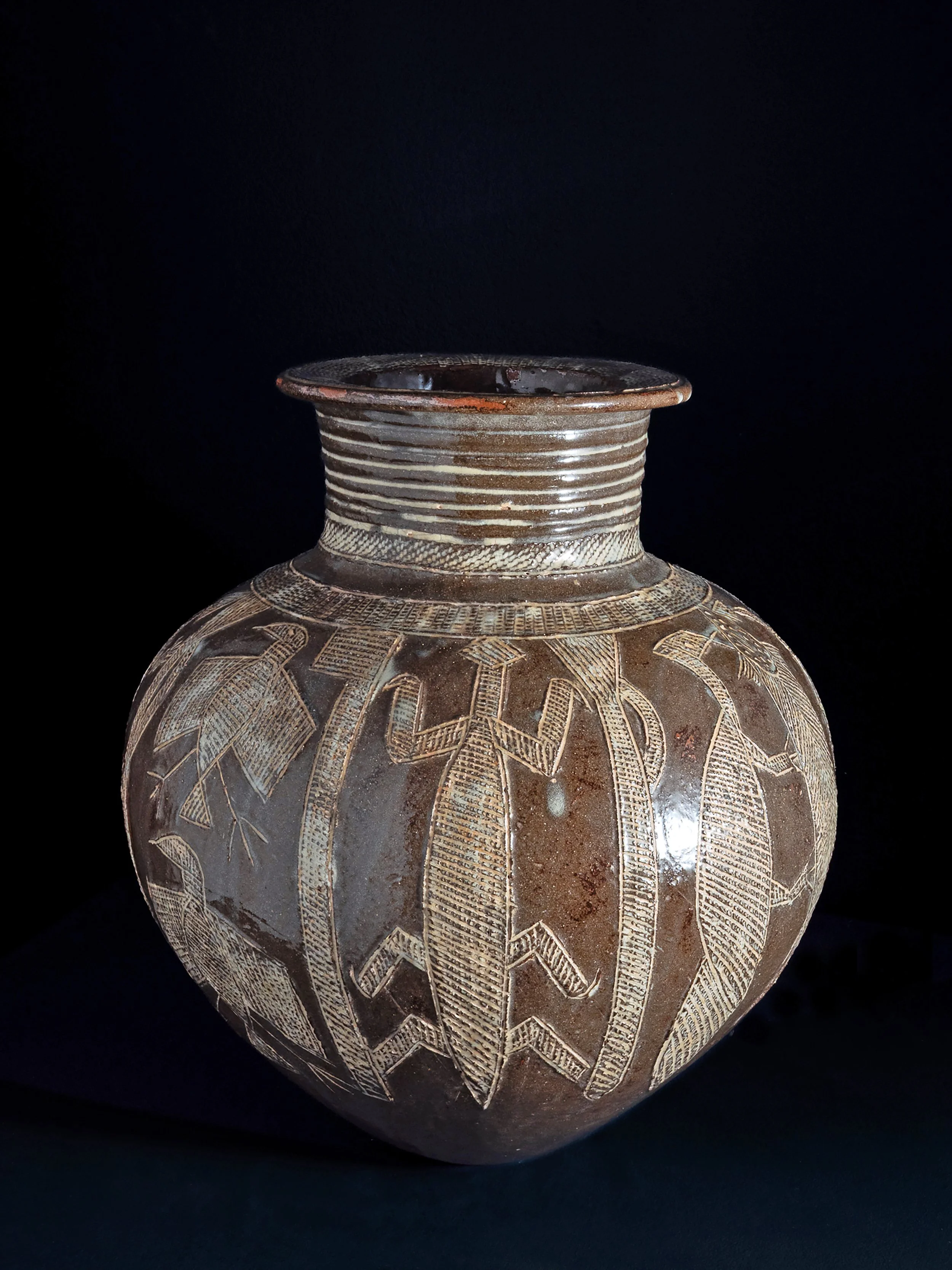
Ladi Kwali
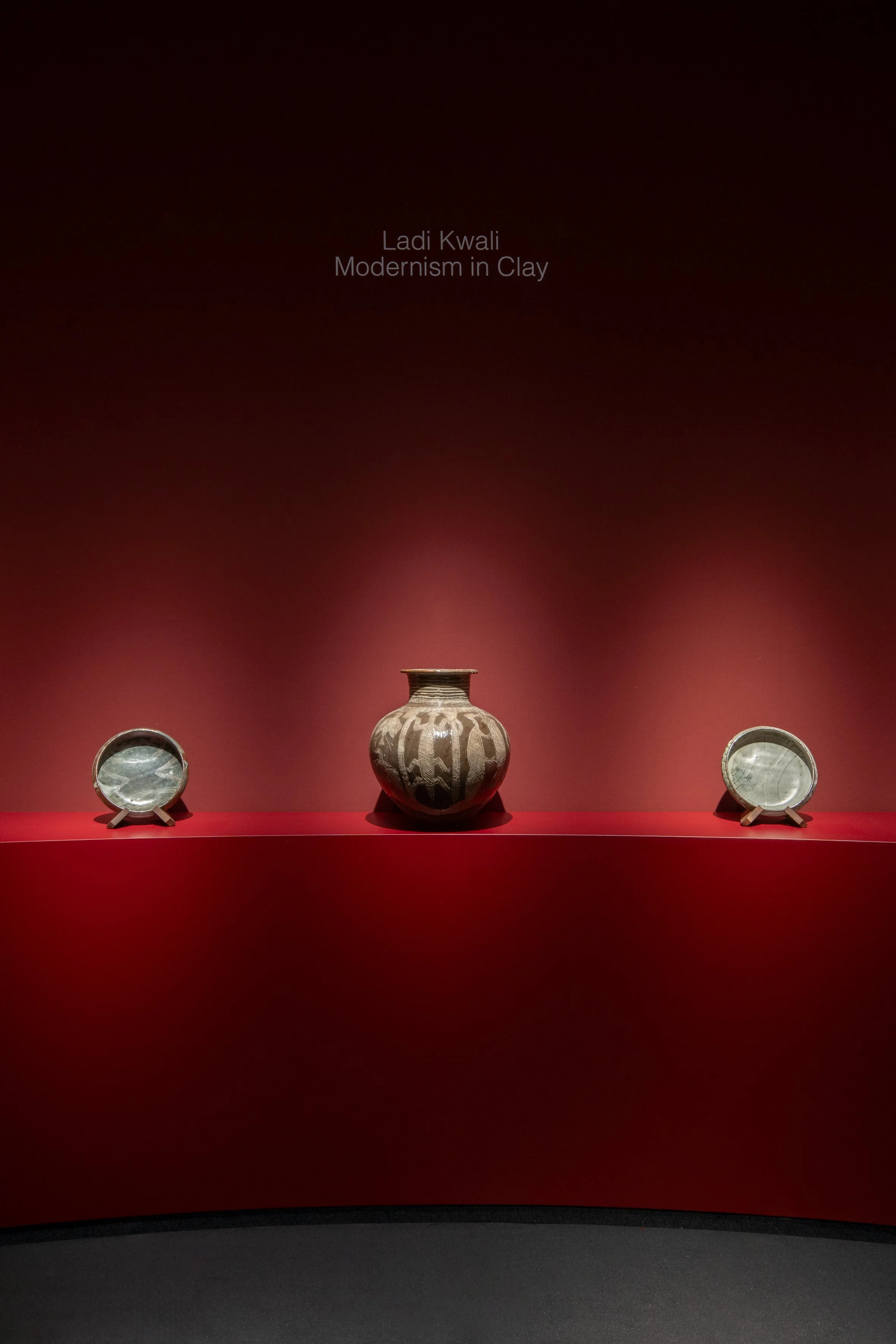
Waterpot, 1968
Stoneware with incised zoomorphic designs, inlaid with white slip beneath iron and transparent glazes.
H 38, D 37 cm
On Reserve
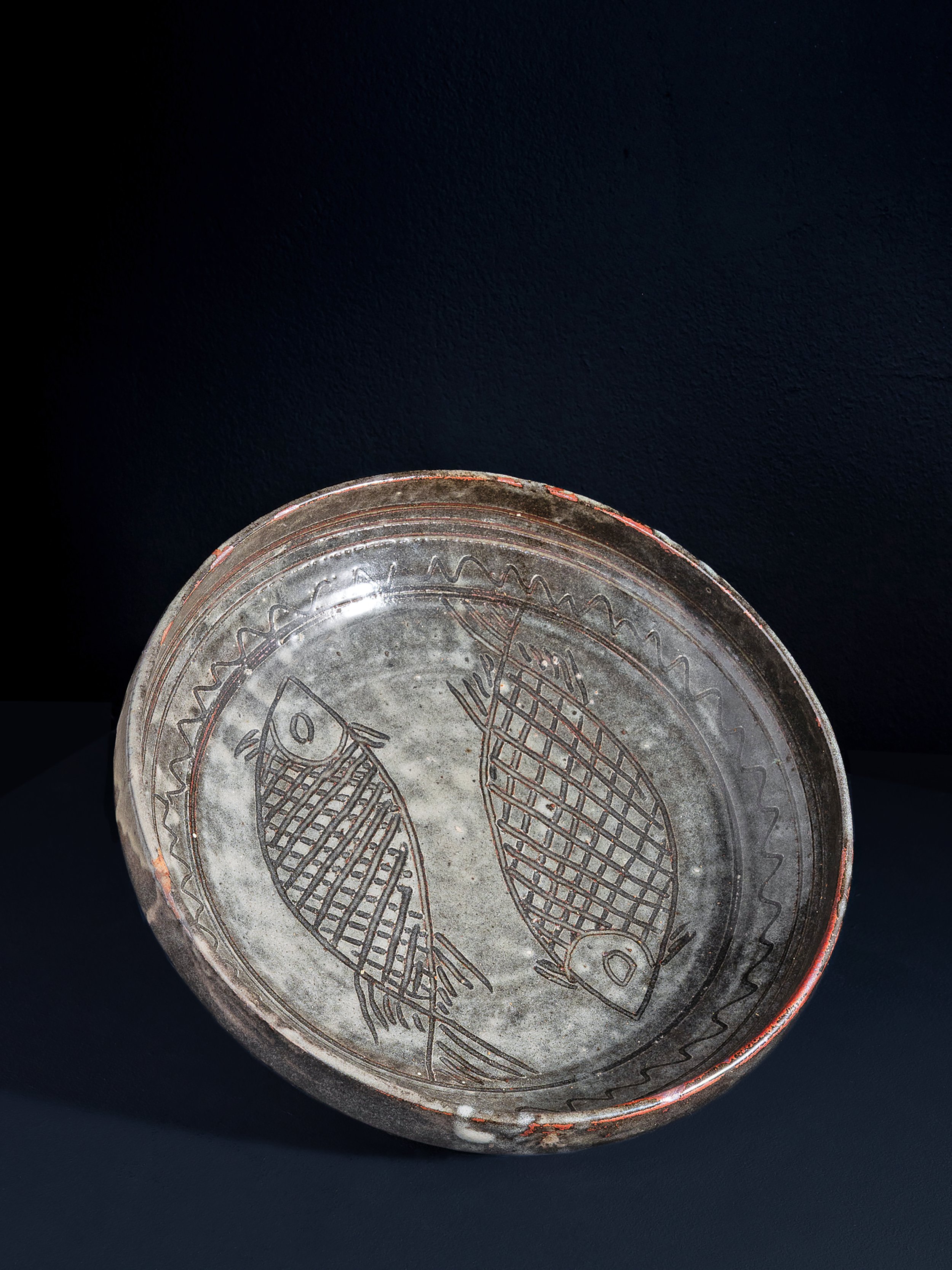
Ladi Kwali
Bowl (fishes), 1970s
Stoneware, grey, transparent and Iron glazing with incised fish motif in the well
H 9, D 31 cm
SOLD
Between the 1940s and the early 1990s, what is now regarded as Nigerian modernism flourished through a dynamic interplay between Indigenous artistic traditions and European modernist ideas. Artists across Nigeria and in diasporic centres such as London and Paris experimented with new forms and materials while navigating the pressures and opportunities of decolonisation. Within this context, Kwali introduced new possibilities for form, scale, and decoration, challenging the gendered dimensions of pottery practice.
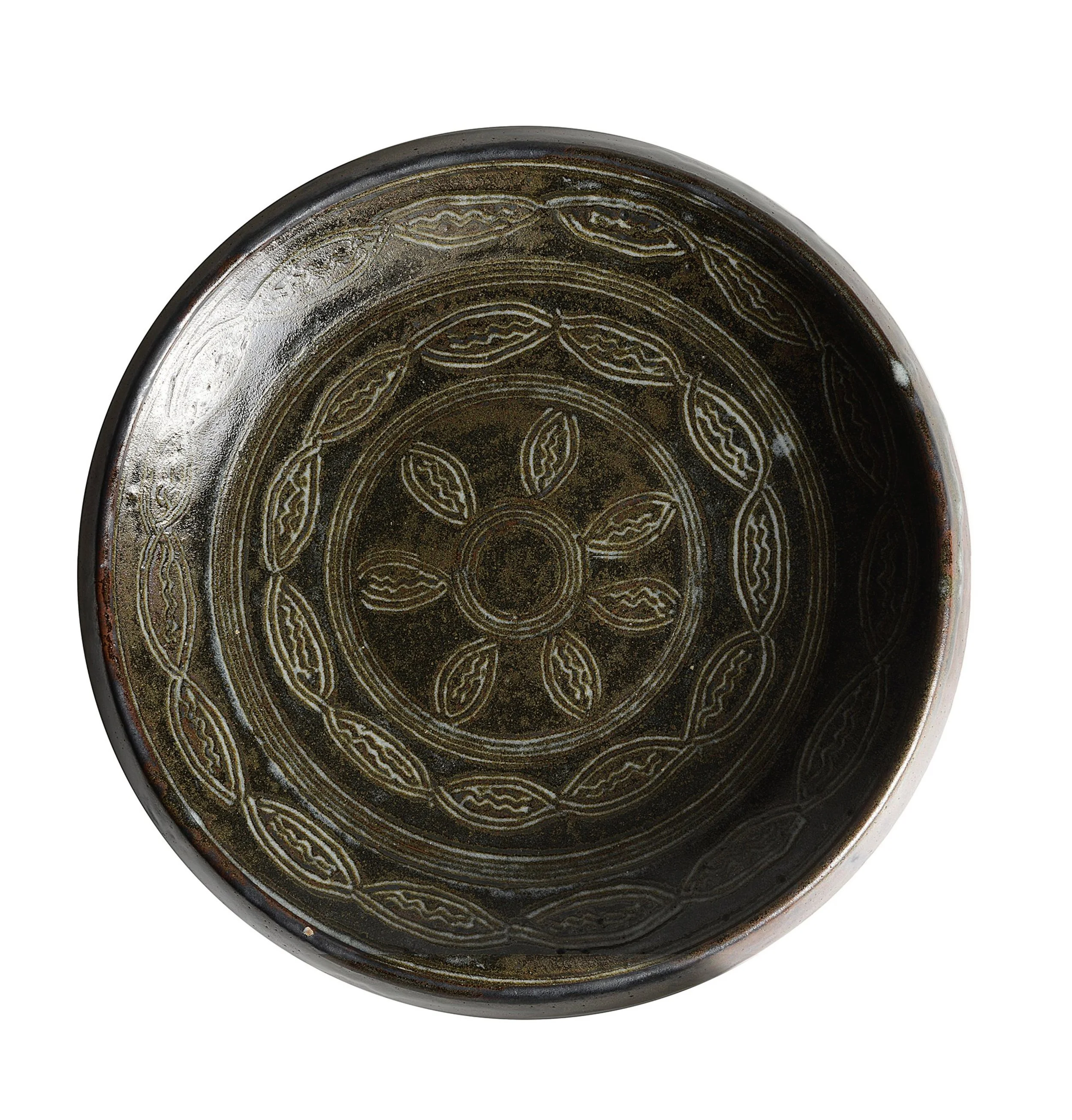
Ladi Kwali
Open Dish
Stoneware, grey and transparent glazes over a brushed iron body with incised linear detailing radiating from a sun like motif in the well
H 7.7 cm, D 33.2 cm
SOLD
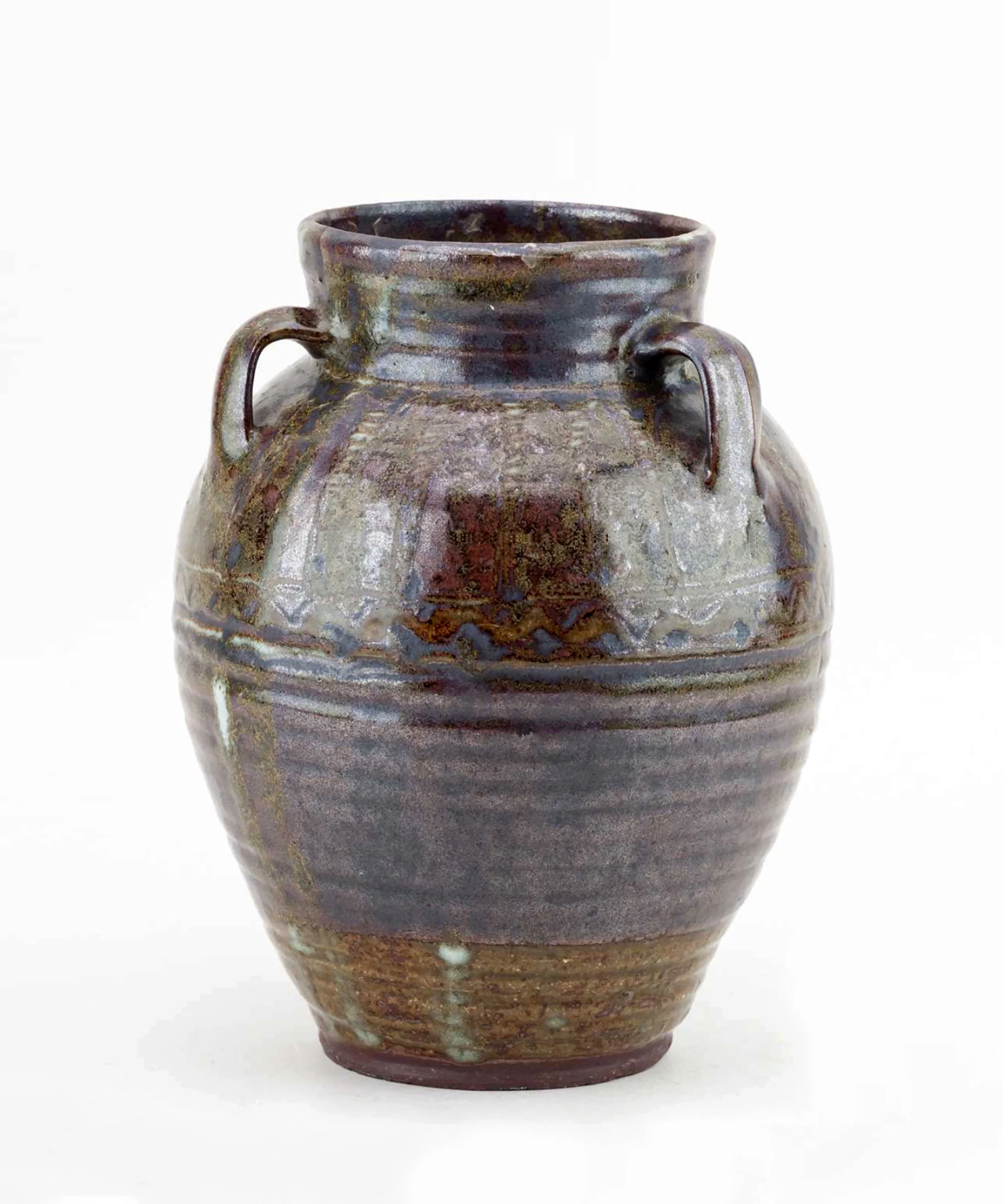
Ladi Kwali
Three handled Jar
Stoneware three handled jar with pronounced ribbing covered in mottled grey and iron glaze
H 24 cm, D 16 cm
SOLD
Her international reputation expanded rapidly from the late 1950s onward, mainly through exhibition opportunities and demonstrations organised by Cardew. Kwali participated in group exhibitions of Abuja pottery at the Berkeley Galleries in London in 1958, 1959, and 1962.
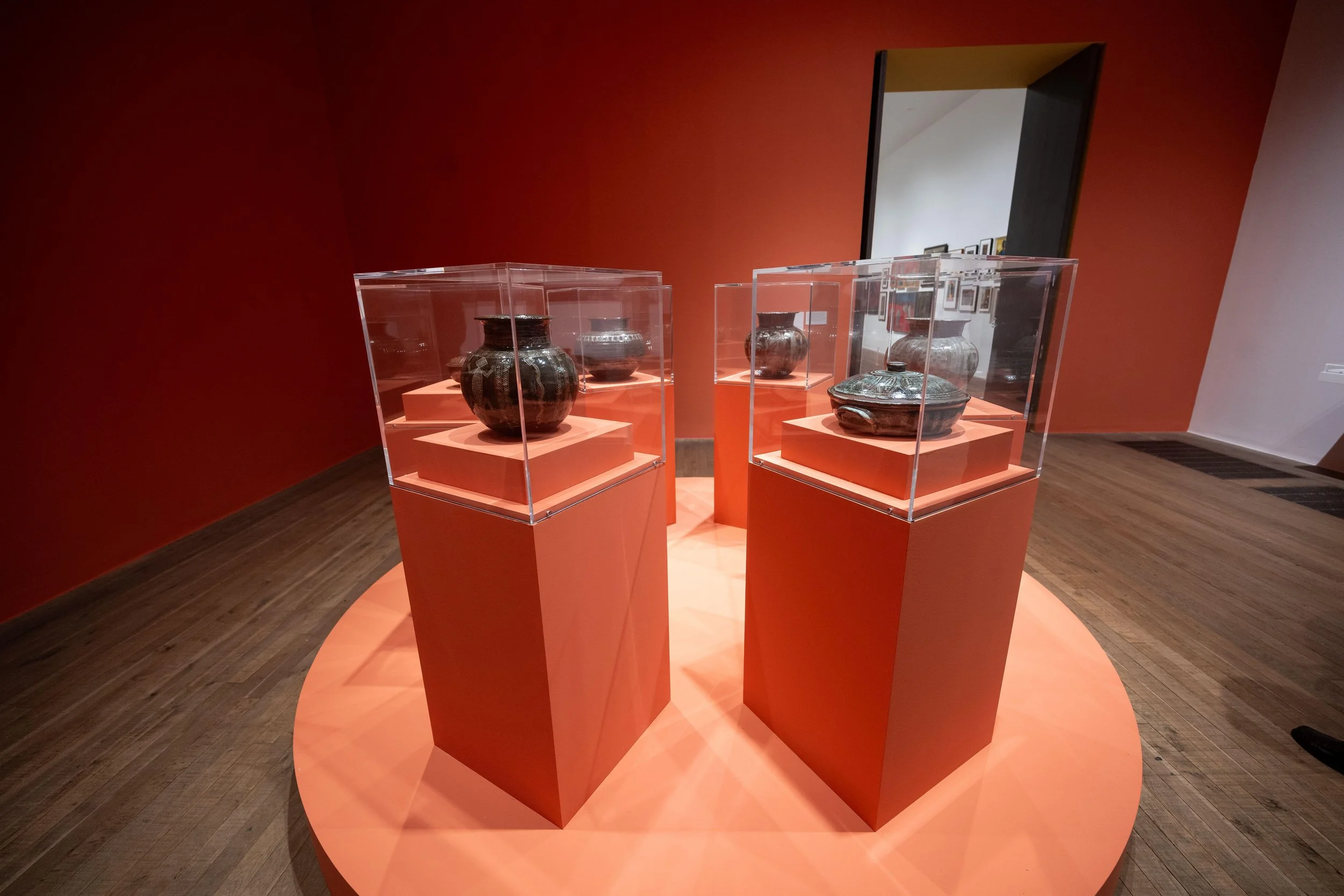
Ladi Kwali room at the exhibition Nigerian Modernism, at the Tate ModernLondon
Kwali’s signature works are large, rounded water jars whose forms are rooted in Indigenous typologies, yet their surfaces reveal an evolving, hybrid visual language. She developed a system of deeply incised bands that encircled the vessel’s body, creating rhythmic intervals of space where she inserted schematized figures of scorpions, fish, birds, snakes, chameleons, crocodiles, and lizards.
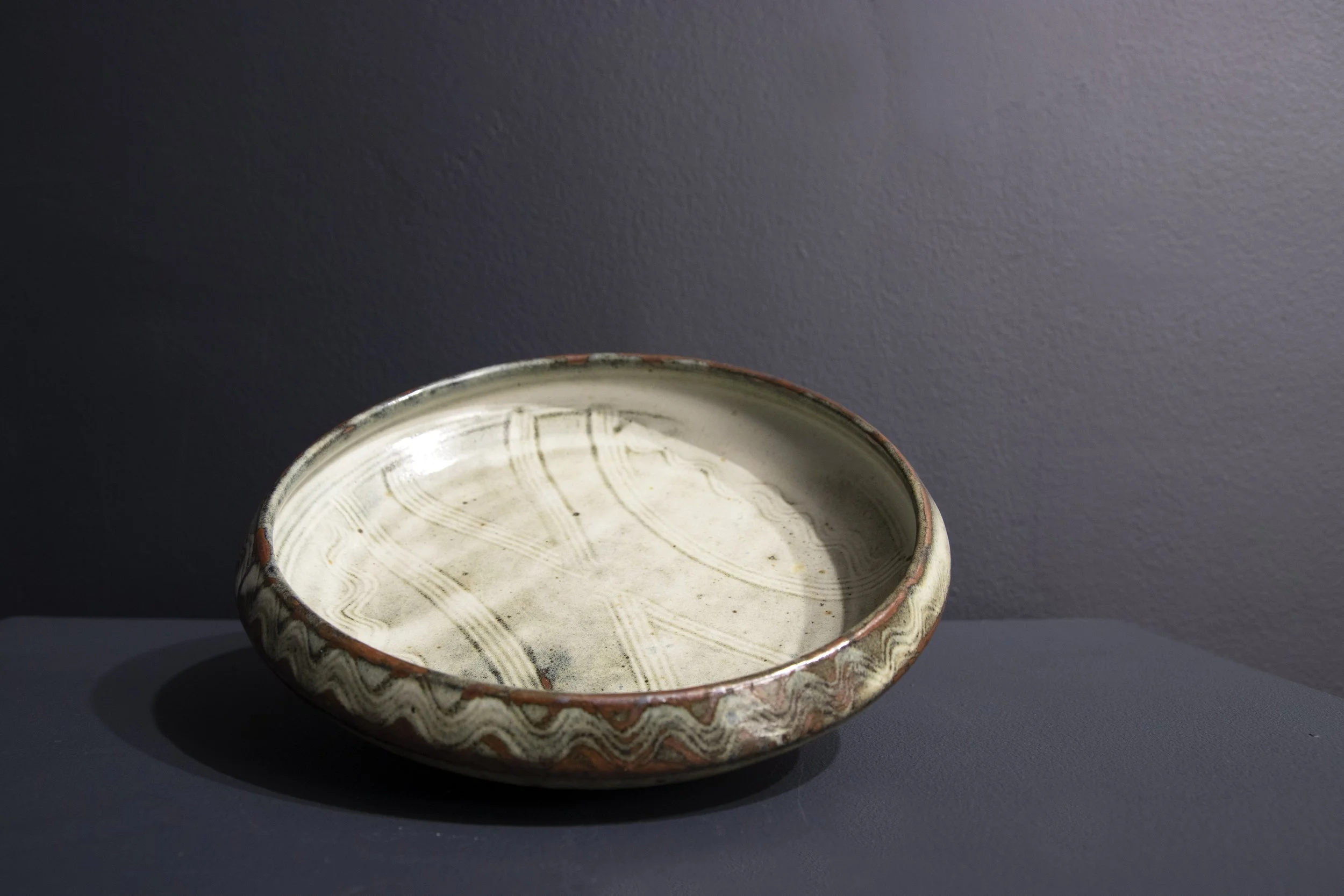
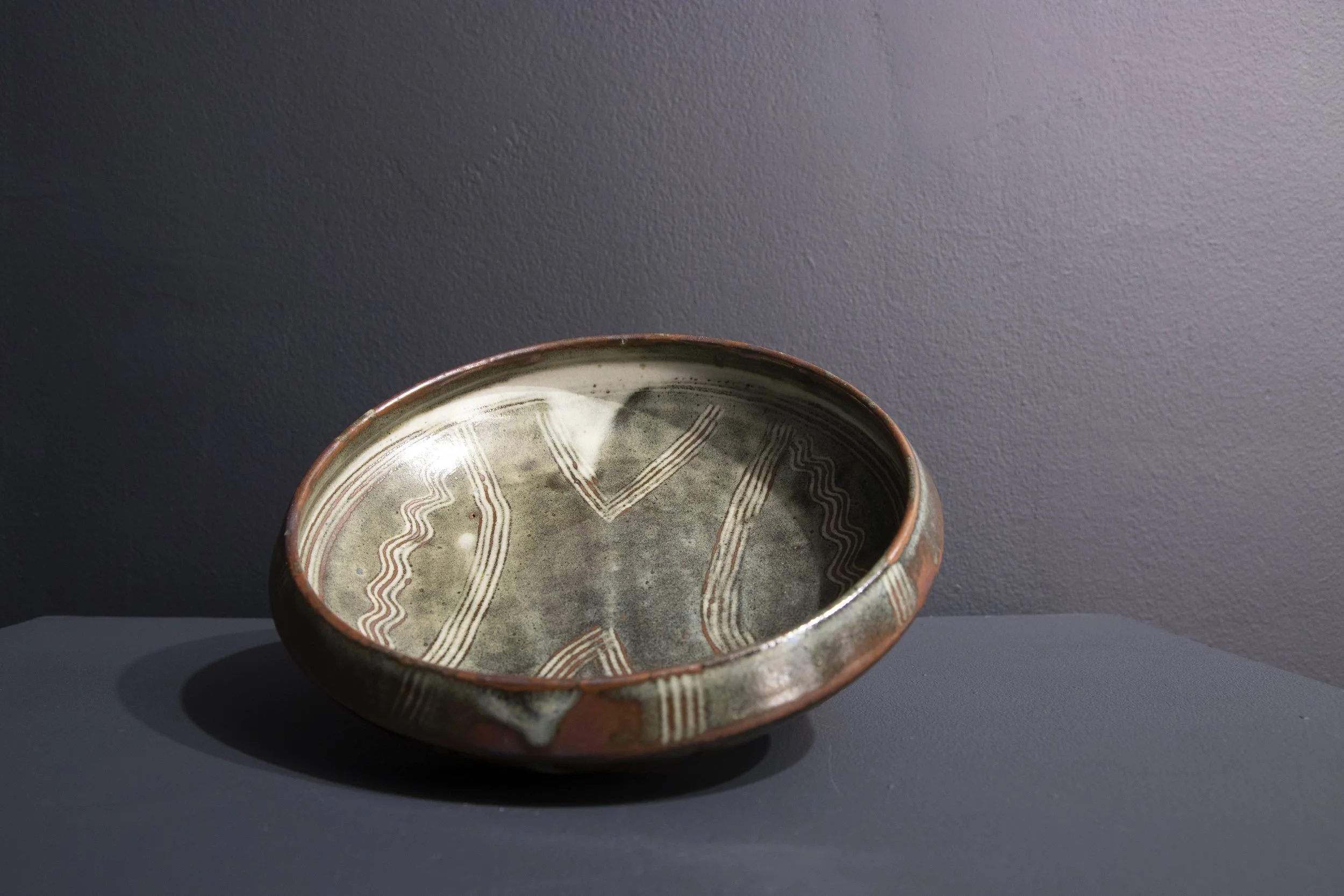
Ladi Kwali
Shallow bowl (2)
Glazed stoneware
H 5 cm , D 24 cm
GBP 6,000
Ladi Kwali
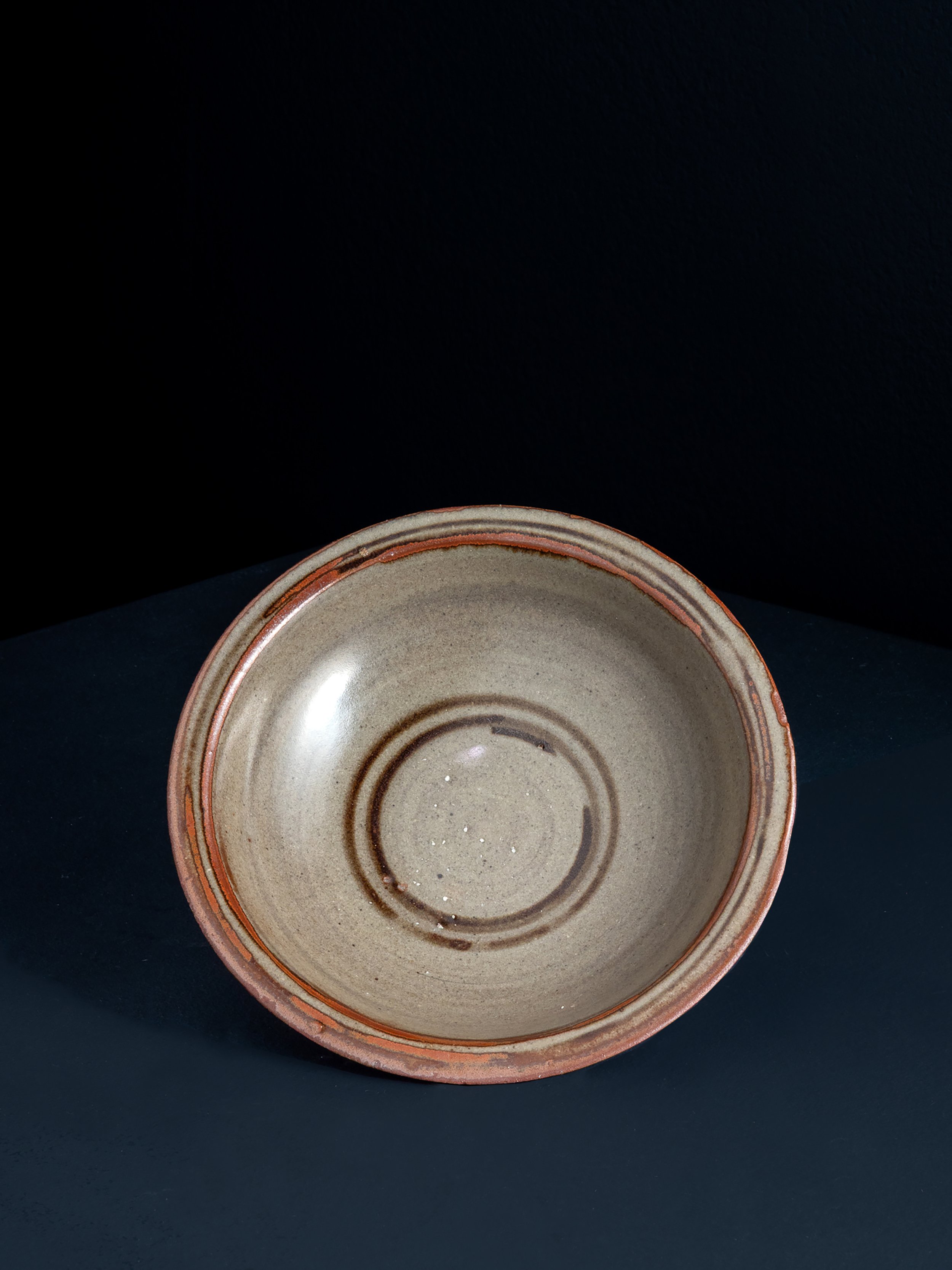
Shallow bowl (3)
Glazed stoneware
H 5 , D 24 cm
SOLD
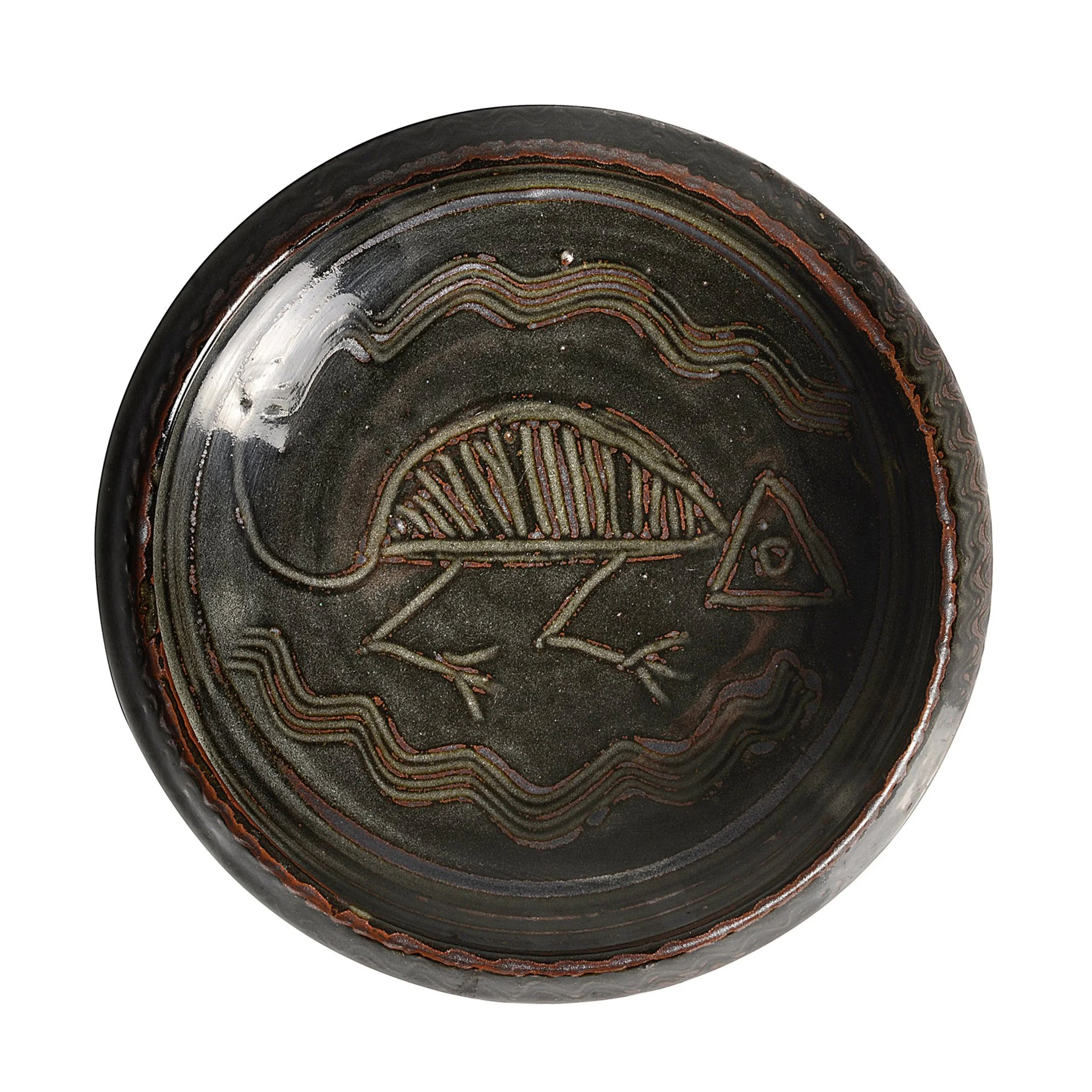
Ladi Kwali
Shallow Bowl with 'Reptile'
Stoneware, rich iron glaze beneath pale grey transparent glaze with incised design of a reptile in the well
H 4.3cm, D 19.8 cm
SOLD
Ladi Kwali
Small Bowl
Glazed stoneware
H 4 cm, D 14 cm
SOLD
Her international reputation expanded rapidly from the late 1950s onward, mainly through exhibition opportunities and demonstrations organised by Cardew. Kwali participated in group exhibitions of Abuja pottery at the Berkeley Galleries in London in 1958, 1959, and 1962. In 1962, she travelled to Britain, where she conducted demonstrations at art schools, including the Royal College of Art, and was awarded an MBE in recognition of her achievements. A year later, the German porcelain manufacturer Rosenthal sponsored her demonstration tour of Rome and several German cities, further elevating her global profile.
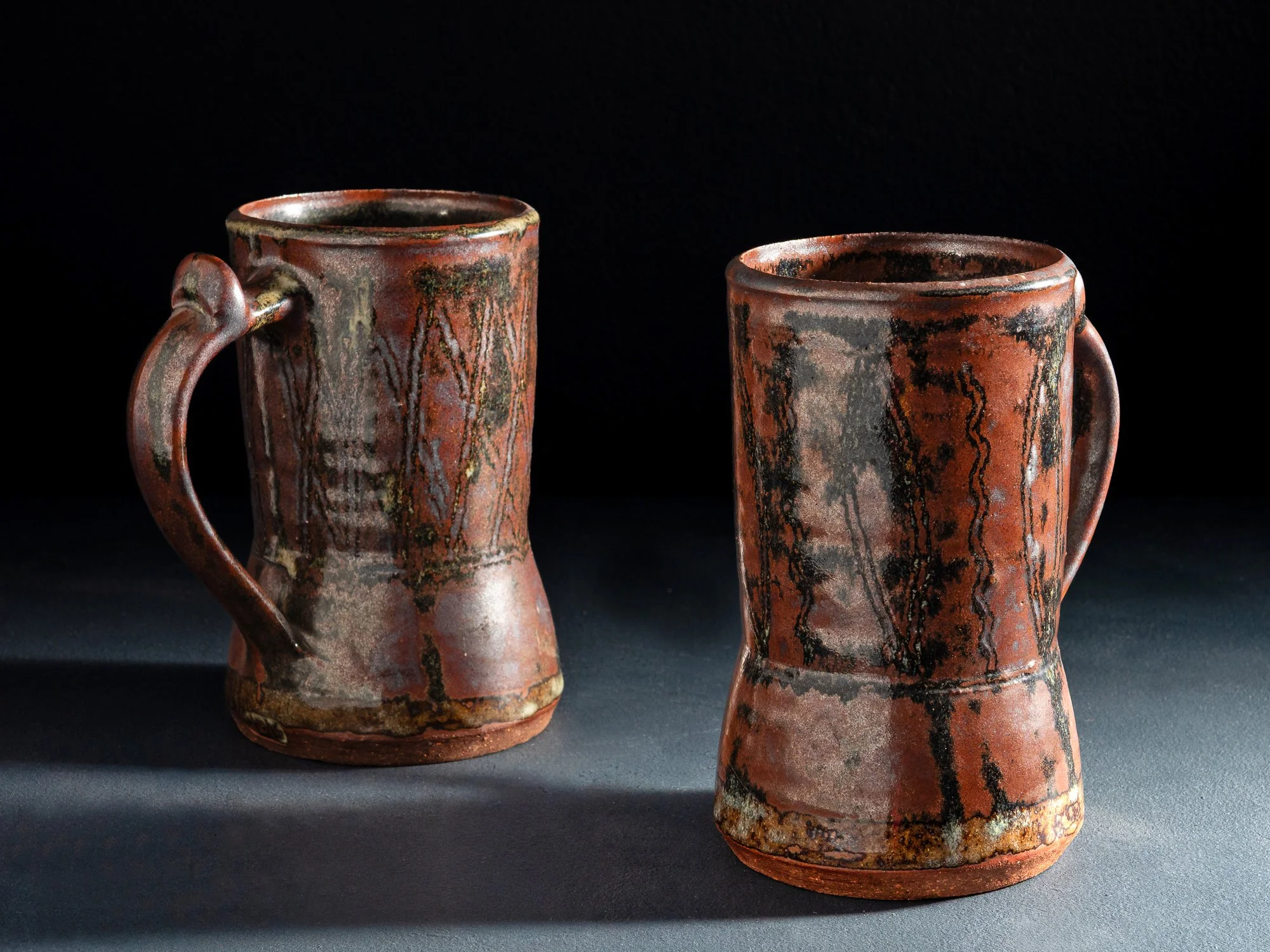
Ladi Kwali
A pair of Tankards II
Glazed stoneware
H17.5 x W9.5 x D15 cm /H16.8 x W10 x D15.5 cm
SOLD
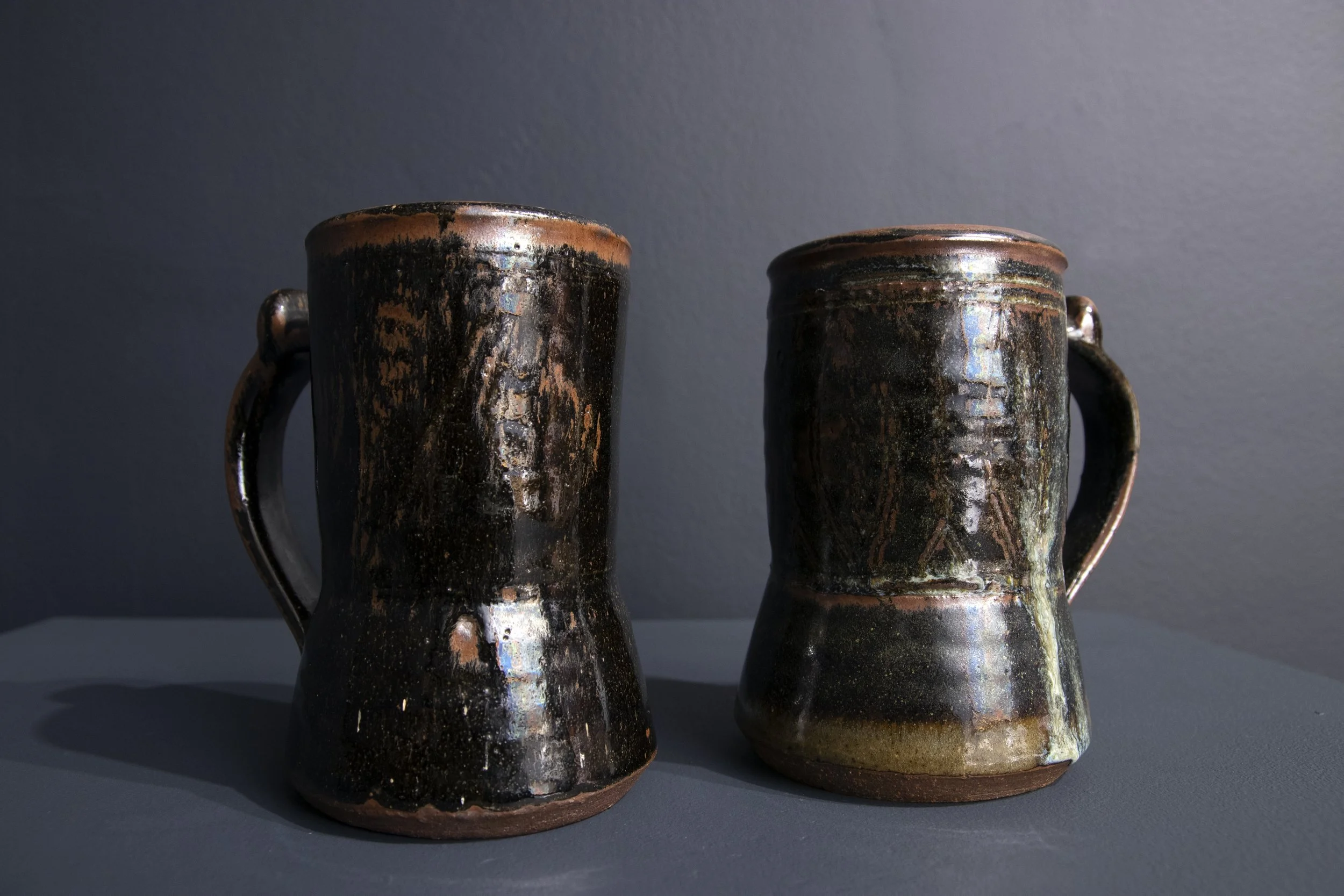
Ladi Kwali
A pair of Tankards I
Glazed stoneware
H15.5 x W10.5 x D14 / H15.5 x W11 x D14 cm
GBP 4,000
Excepts from text by Dr Jareh Das, an independent curator, scholar and (occasional) florist who works between West Africa and the UK.