
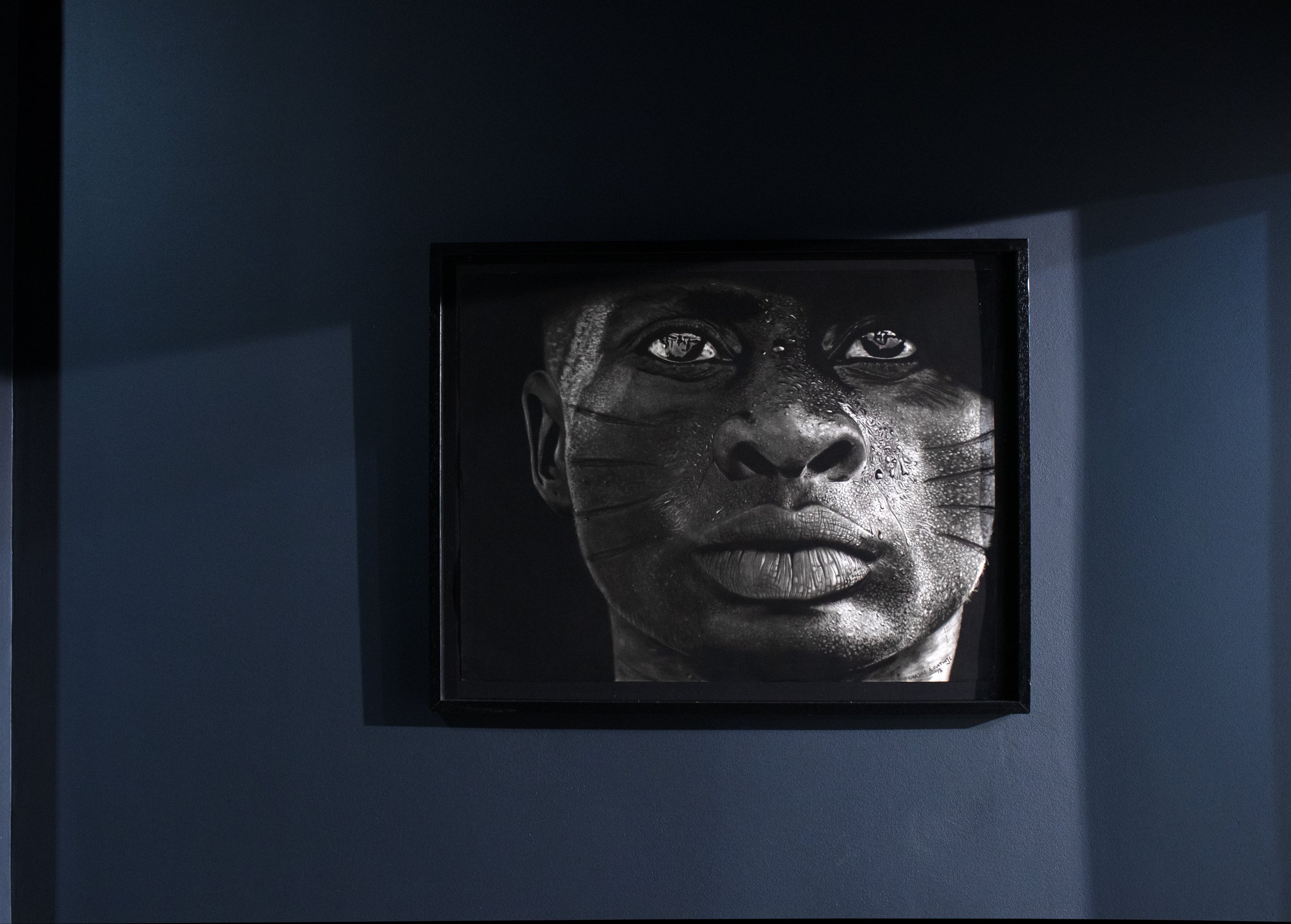
1-54 London
Modernist Icons
Booth M3
Terrace Rooms
15 - 18 October
Somerset House
A presentation of 20th century works from Nigerian modernist icons, showcasing paintings, prints and sculptures by Bruce Onobrakpeya, Ben Enwonwu MBE, Irein Wangboje, Twins Seven Seven, Uche Okeke and foremost female Nigerian ceramicist Ladi Kwali.
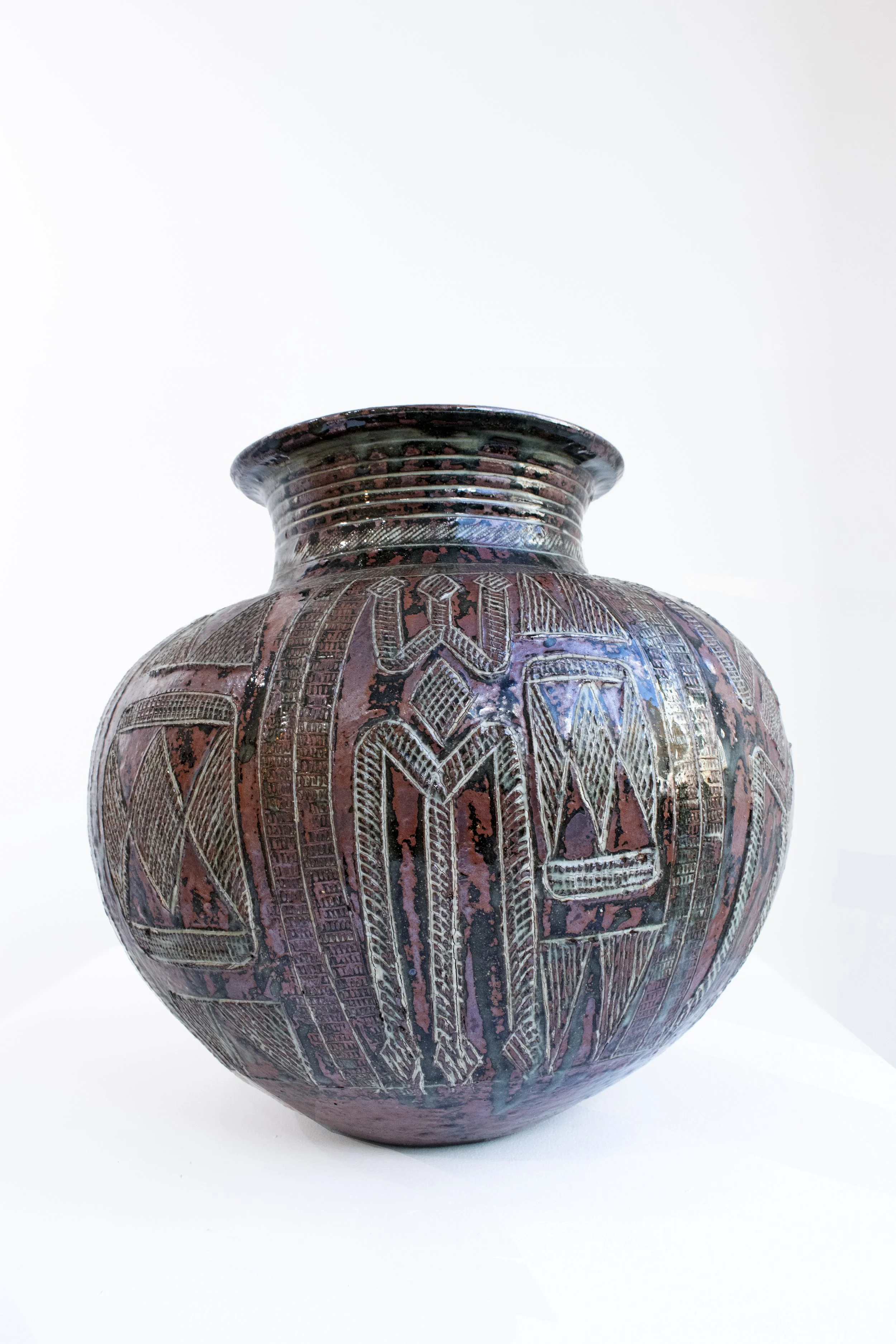
LADI KWALI
Water Pot, 1960
Materials: Stoneware, incised design with reptiles and abstract geometric patterns inlaid with white slip beneath a rust iron glaze with running green ash glazes
14 3/4 x 15 1/2 x 15 1/2 in
37.5 x 39.5 x 39.5 cm
£ 64,000.
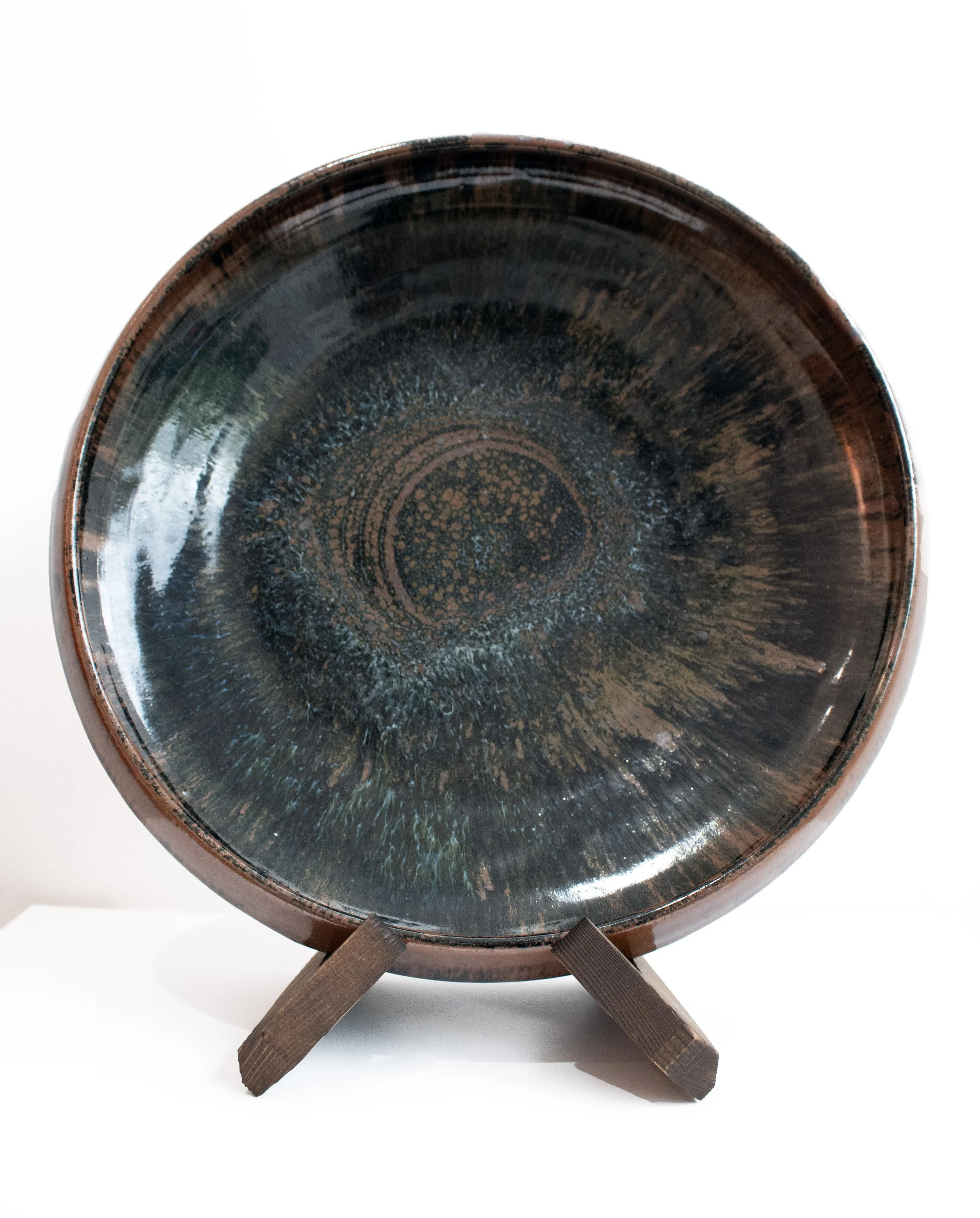
LADI KWALI
Large bowl with concave lip, 1960s
Stonewaare, Iiron glazes withh concave lip edge and circular foot
H 7, D 31 cm
£ 12,000
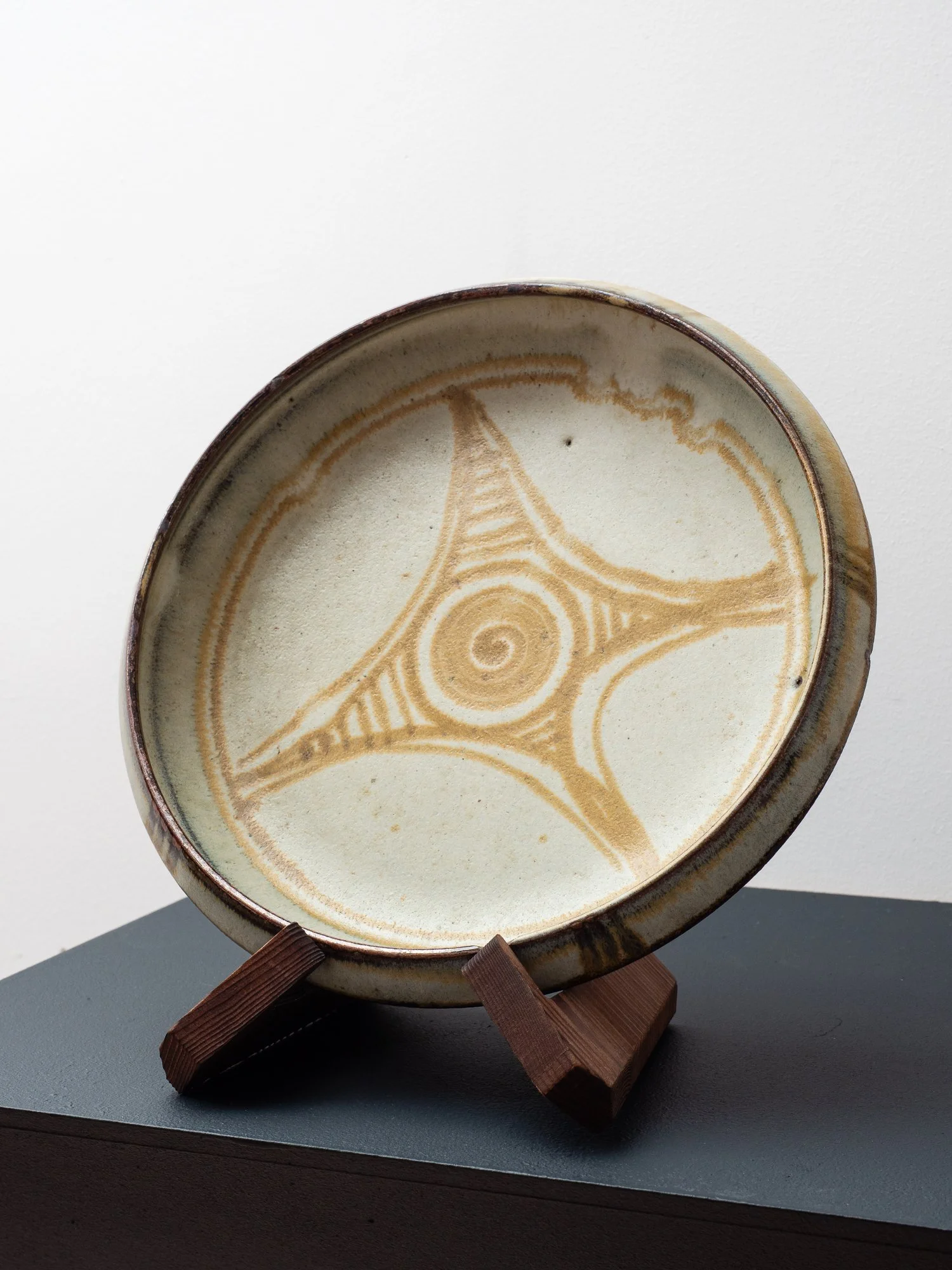
LADI KWALI
Raised lip Bowl,, 1960s
impressed LK and Abuja pottery seal
Drip glaze earthenware bowl with raised lip
H7, D 26 cm
£ 7,500.00
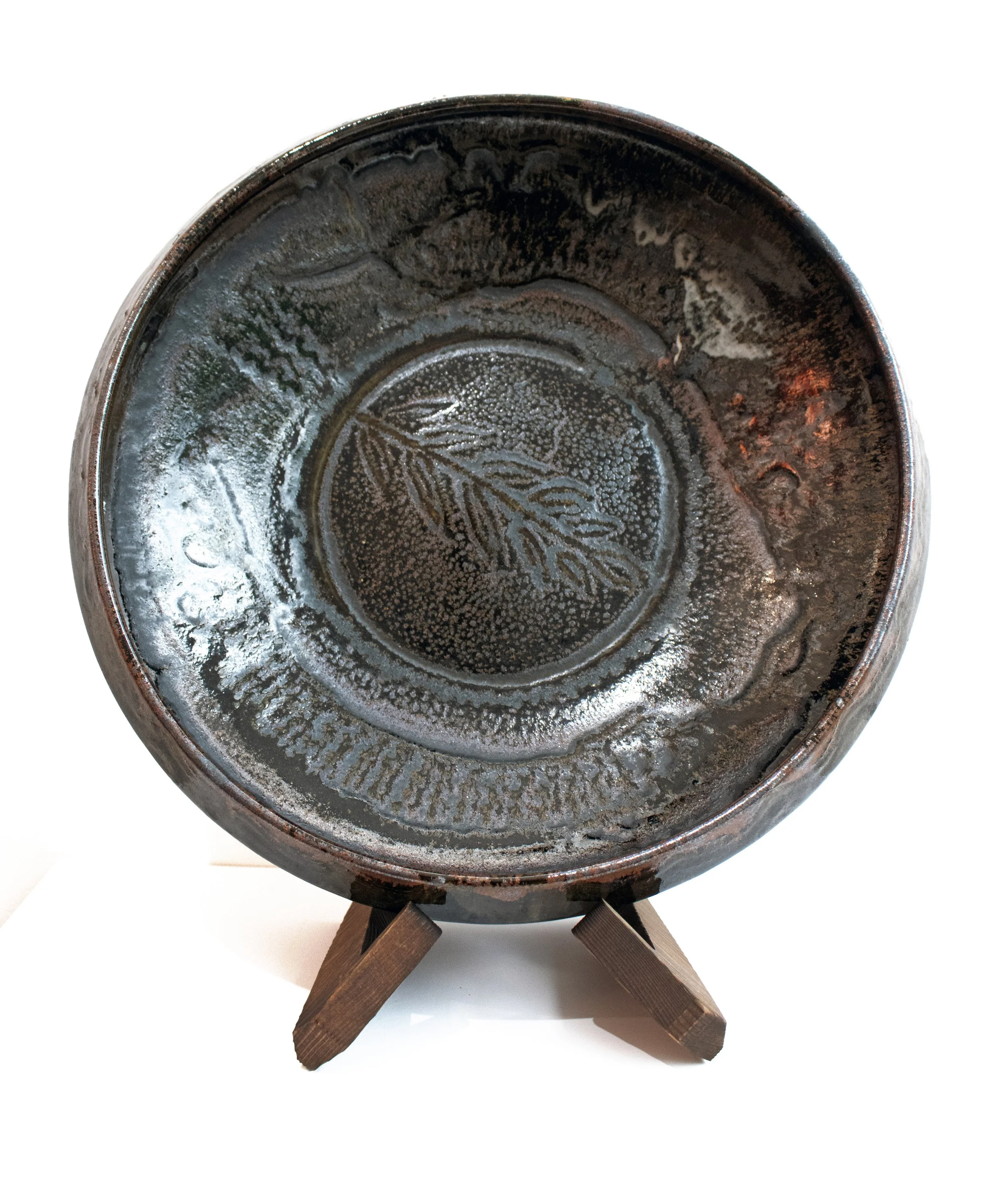
LADI KWALI
Large bowl, 1960s
drip glaze earthenware pottery bowl with concave lip revealing interior decorated with foliate reserve, impressed LK and Abuja pottery seal
H 12, D 35 cm
£ 18,000.00
Ladi Dosei Kwali (c. 1925–1984) was born in the village of Kwali (now part of Nigeria’s Federal Capital Territory), into a family where pottery was a traditional female craft. From a young age, she learned pottery from her aunt, mastering the ancestral technique of coiling and pinching clay by hand to create functional vessels such as water jars, cooking pots, bowls and storage containers. Her early works were often decorated with incised geometric and stylised figurative motifs, including lizards, crocodiles, scorpions, birds, and fish, reflecting the symbolic language of her Gbari (Gbagyi) heritage. Her exceptional skill drew notice beyond her village. Several of her pots were acquired by the Emir of Abuja, Alhaji Suleiman Barau, whose palace later became the place where British studio potter Michael Cardew encountered her work in 1950. Deeply impressed, Cardew invited Kwali to join the pottery program he had just initiated.
In 1954, she enrolled at the newly founded Abuja Pottery Training Centre, becoming the first female potter to train there. While at the Centre, she learned wheel-throwing, glazing, kiln-firing, slip and saggar techniques. Yet she never abandoned her roots: she continued to hand-build vessels with coiling, decorating them using sgraffito and incised motifs. She often filled incised patterns with white slip and applied a translucent glaze, achieving a striking effect, a beautiful fusion of traditional Gbagyi pottery and Western studio ceramics.
Over her career, she produced hundreds of jars, pots, bowls and other forms that transformed clay vessels into objects of art. Her work gained international recognition through exhibitions in London and beyond in the late 1950s and 1960s. In 1963, she was appointed Member of the Order of the British Empire (MBE).
Later, she received an honorary doctorate from Ahmadu Bello University, Zaria, and the national honours of the Nigerian National Order of Merit (NNOM) and the Order of the Niger (OON). Ladi Kwali died on 12 August 1984 in Minna. Her legacy endures not only through her pottery but also symbolically and nationally: she remains the only Nigerian woman to appear on the country’s currency, the 20-naira note, and the pottery centre she helped shape was renamed the Ladi Kwali Pottery Centre. Through her mastery of clay, Ladi Kwali bridged ancestral tradition and modern technique, elevating a local woman’s craft to international art. Her life and work stand as a testament to creativity, cultural memory, and the power of craft to speak across global boundaries.