
New in November
Tiwa Akinjide : Exulansis
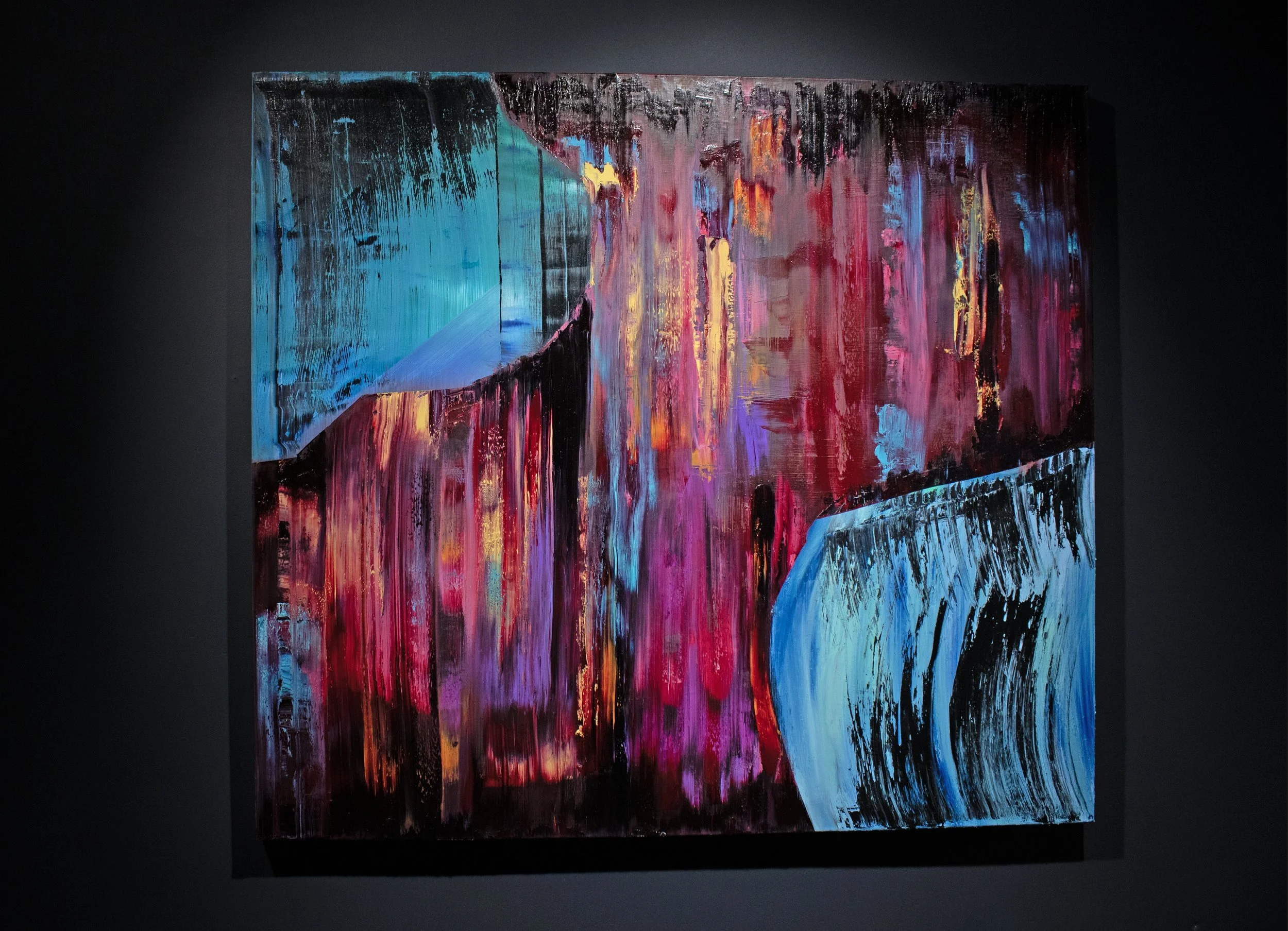
The solo exhibition Exulansis presents a new body of non-representational paintings that explore colour, materiality, chance, and contemplation. Through an experimental process of layering, removal, and hand-made mark-making, Akinjide uses painting to approach experiences that resist conventional language. Situated within the lineage of Black artists who have expanded the possibilities of abstraction, the exhibition also considers the freedom of a contemporary Black British artist to investigate interiority, philosophy, and material experience when not required to represent diasporic identity through the body, biography, or trauma.
Exulansis is the inability to communicate an experience, and the subsequent reluctance to continue attempting because of the frustration of not being understood. This chasm between speaker and audience does not exist because of a lack of care, but because the listener lacks the ability to process the experience being referenced. This body of work utilises the notion of exulansis as the point of departure for conceptualising the hope of being understood as an emergent possibility rather than a resolved solution through painting.
The artist delves into the idea that language is circular in how it defines phenomena, and that when pieced together it can effectively describe our experience, but ultimately remains an inaccurate approximation of experiential reality. Abstraction begins where language fails. “Not knowing howˮ is the state in which abstraction thrives. It is therefore conceptually necessary, not stylistically convenient, to convey the complex obscurity of the subject matter. Through his paintings, colour becomes the language through which we are able to grasp a sense of the unknowable.
Working with oils, Akinjide primarily uses his own hands as a direct conduit rather than using tools to manipulate the paint. By making himself the tool rather than simply the executor of the painting, he links intentionality and chance directly to his experiential relationship with the material, removing another layer of translation. His physical experience becomes manifest in the painting as well as through its making. In this way, the viewer encounters not a diluted approximation, but the amalgamation of the effort his body has spent in conversation with the work within his new body of work. The physical process becomes an analogue for the conceptual proposition.
Artistic work in the diaspora in the West has historically been expected to make the Black experience immediately legible. The artist poses the question of what can be achieved when this expectation is suspended? What remains is not an absence of identity, but the freedom to investigate experiences that exceed rigidly ascribed identity categories. Artists of the African Diaspora in the UK & USA, such as Sir Frank Bowling, Jack Whitten, Sam Gilliam, and many more, have produced works that challenge this notion. Building on the precedent previously laid out, the work seeks to advance the right of Black artistic practice to encompass abstraction, colour, materiality, hope, interiority, existentialism & uncertainty.